Finalist
yolo dex
We built an end-to-end “video → dataset → agent” pipeline as a Codex Skill plugin that can turn any YouTube video into a training-ready vision dataset.
Core trick
Downloads YouTube frames, fans them out to parallel Codex agents that draw bounding boxes, and exports a YOLO-format dataset for training.
Description
We built an end-to-end “video → dataset → agent” pipeline as a Codex Skill plugin that can turn any YouTube video into a training-ready vision dataset. You paste a URL, and the skill runs locally to download the video, extract frames, and spin up as many parallel Codex labeling agents as needed to generate bounding boxes for the objects of interest. It exports a full YOLO dataset on-device, which can immediately train a detector. That detector becomes a game-state extractor from pixels, enabling bots to play any game without emulator hooks or engine access, essentially compressing dataset creation + model bootstrapping into one repeatable command.
README excerpt
<h1 align="center">yolodex</h1>
<div align="center">





</div>
<div align="center">
codex-native yolo dataset + training agent skills for any unlabeled data. codex skills help determine how to properly label and splice your data.
</div>
[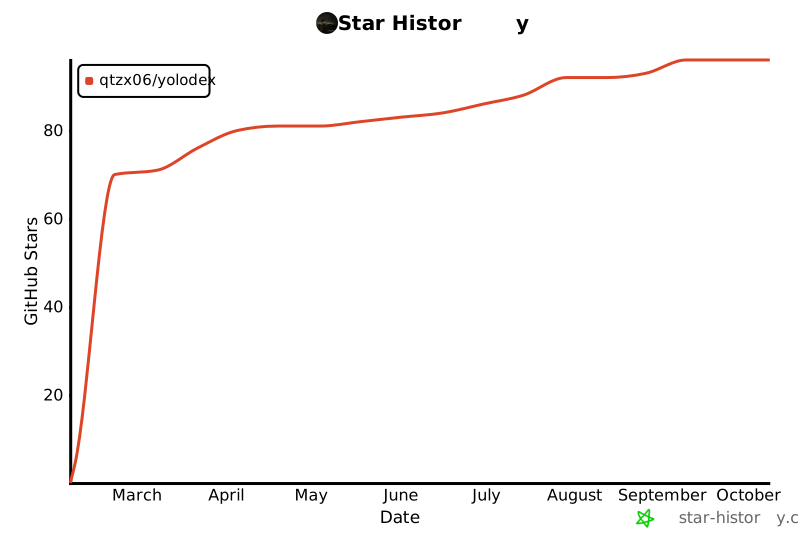](https://star-history.com/#qtzx06/yolodex&Date)
## architecture
```mermaid
flowchart LR
A["data source (any unlabeled data)"] --> B["collect"]
B --> C["label"]
C --> D["augment"]
D --> E["train"]
E --> F["eval"]
C -. "parallel subagents in git worktrees" .-> C
F --> G{"meets target?"}
G -- "no" --> C
G -- "yes" --> H["complete"]
```
## components
- skills runtime: [codex skills](https://developers.openai.com/codex/skills/)
- pipeline skills: `collect`, `label`, `augment`, `train`, `eval`, `yolodex`
- orchestration loop: `yolodex.sh` + `AGENTS.md`
- shared